
Bell’s palsy Treatment in Hanumangarh
Bell’s palsy, also recognized as idiopathic facial paralysis, is a puzzling condition marked by sudden muscle weakness or paralysis in the middle of the face.
This unexplained phenomenon can occur suddenly, worsening within 48 hours due to damage to the facial nerve (seventh cranial nerve). It can affect individuals of any age, leading to pain and discomfort primarily on one side of the face.
Signs & Symptoms
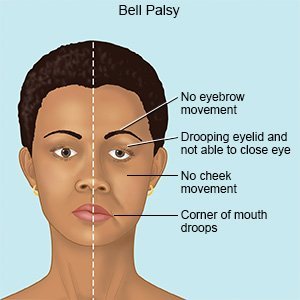
Individuals experiencing Bell’s Palsy may encounter mild fever, pain behind the ears, neck stiffness, and weakness or stiffness on one side of the face.
Common signs include a rapid onset of weakness to total dysfunction, facial droop, difficulty in creating facial expressions, drooling, and heightened sensitivity to sound on the affected side.
Although Bell’s Palsy exhibits symptoms akin to a stroke, it seldom recurs and typically resolves over time, leaving no lasting complications. Nevertheless, during its duration, closing the eye on the affected side can be challenging, necessitating protective measures to prevent eye dryness, especially at night.
Causes of Bell’s Palsy
While the exact cause of Bell’s Palsy remains unknown, medical researchers speculate that a viral infection might trigger this condition.
Viruses and bacteria associated with Bell’s Palsy encompass Herpes simplex (causing herpes and genital herpes), HIV (impairing the immune system), Sarcoidosis (inducing organ inflammation), Herpes zoster virus (resulting in chickenpox), Epstein-Barr virus (causing mononucleosis), and Lyme disease (resulting from an infected tick).
Bell’s Palsy Treatment In Hanumangarh: Effective Rehabilitation for Facial Paralysis
Physiotherapy plays a pivotal role in averting permanent contraction and loss of tone in facial muscles. Various treatments expedite recovery without residual paralysis:
MIME Therapy: This neuromuscular retraining approach melds facial exercises with emotional input to enhance movement. Techniques include relaxation exercises, massage therapy, and emotion expression exercises. MIME therapy mitigates paralysis severity by improving facial symmetry.
Proprioceptive Neuromuscular Facilitation (PNF) Technique: Therapists resist movement on the strong side while assisting the paralyzed side, enhancing muscle coordination. Mirror exercises provide visual feedback, aiding rehabilitation.
Electric Muscle Stimulation (EMS): EMS employs pen electrodes to stimulate and contract facial muscles, preserving muscle tone affected by paralysis.
Massage: Focused massages strengthen facial muscles, targeting upper and lower facial muscles as well as cheeks. Regular massage repetitions bolster movement recovery.
Exercises: Tailored facial exercises reeducate muscles, augmenting strength and coordination. These exercises, performed in front of a mirror, encompass raising eyebrows, frowning, nose wringing, cheek movements, blowing air, closing the eye, and smiling. Precise exercise planning ensures individualized rehabilitation for each patient.
At Dr. Ram Sihag physiotherapy Clinic for Bell’s Palsy Treatment In Hanumangarh, personalized plans are meticulously crafted to prevent muscle damage. It is imperative to adhere to therapists’ recommendations and engage in the correct exercises.
Commitment to these exercises is paramount for enhancing facial muscle strength and coordination, marking the beginning of your journey towards improved facial muscle health.
Trust our expertise, follow your therapist’s guidance, and participate diligently in the prescribed exercises—your path to improved facial muscle strength and coordination starts right here.
Copyright ©2023 all rights reserved