
Tennis Elbow Treatment In Hanumangarh
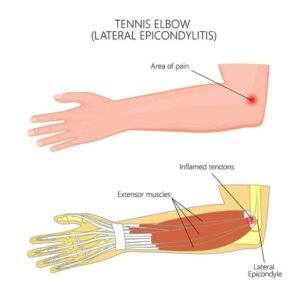
Tennis elbow, medically known as lateral epicondylitis, refers to the condition where one experiences pain and tenderness on the outer side of the elbow, just below its bend. This discomfort may also extend to the forearm and wrist.
Contrary to its name, tennis elbow can affect individuals who have never played tennis. It is primarily caused by the overuse of the wrist extensor muscles.
Symptoms:
- Pain and tenderness on the outer side of the elbow just below the bend.
- Difficulty lifting objects with the affected hand; even simple tasks like holding a cup of tea can strain the elbow.
- Increased pain and stiffness around the elbow in the morning.
- Pain radiating from the elbow to the forearm and wrist.
- Weak grip in the affected hand; holding small objects, including writing, becomes challenging.
- Painful twisting of the forearm, such as when turning a doorknob.
- Swelling and burning sensations around the elbow.
- Limited and painful straightening of the forearm.
Causes:
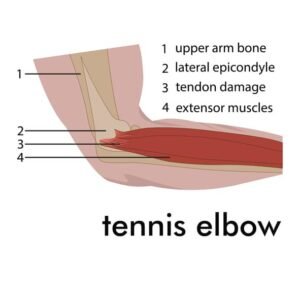
The primary cause of tennis elbow is the injury or inflammation of the extensor carpi radialis brevis (ECRB) muscle, which is responsible for raising or extending the wrist.
- Repetitive Activity: Engaging in activities like playing the backstroke in tennis or other racquet sports can lead to tennis elbow. It can also result from non-sports-related activities such as prolonged use of a computer mouse or knitting.
- Strenuous Activity: Lifting heavy weights, whether during intense gym workouts or daily tasks like lifting a heavy pressure cooker, can contribute to tennis elbow.
- Injury: A direct blow to the elbow or striking the elbow against a hard surface can cause this condition.
Physiotherapy Treatment for Tennis Elbow
Diagnosing tennis elbow begins with a comprehensive clinical evaluation. When a patient consults us, gathering relevant information is crucial. This includes understanding:
Pain Onset: Determining how the pain started helps identify specific activities triggering discomfort.
Pain Cause: Understanding the root cause allows us to educate the patient on activities that may be exacerbating the condition.
Duration of Pain: Differentiating between acute and chronic pain guides the treatment approach effectively.
Additionally, we conduct a thorough examination to pinpoint whether the tennis elbow tenderness is localized or if there’s radiation to the arm or forearm. It’s essential to rule out any cervical (neck) component contributing to the symptoms.
Treatment Approach:
Addressing Pain: In acute cases, we employ Rest, Ice, Compression, and Elevation (RICE) techniques to reduce inflammation and provide relief. Other pain management methods include ultrasound, taping, laser therapy, and muscle stimulation. For forearm muscle rest, a brace might be recommended temporarily.
Progressive Exercises: As pain subsides, we introduce exercises aimed at enhancing strength and flexibility in the forearm muscles. The therapist tailors the exercise regimen to each individual.
Manual Therapy: Therapists employ joint mobilization techniques, along with specific movements, to break adhesions at tendon attachments and release tightness. This approach reduces pain, enhances joint function, and improves grip strength.
Self-Stretching Exercises: Patients are taught various self-stretching exercises. Additionally, specific exercises involving a 1 kg dumbbell, wrist supination, wrist flexion, wrist extension, and towel twisting are incorporated to strengthen and improve flexibility.
Technique Correction: For athletes, proper warm-up sessions are emphasized to prevent muscle and tendon injuries. Therapists identify faulty techniques, such as gripping the racquet too tightly, contributing to the pain.
Tennis elbow commonly affects individuals between 30-50 years, with higher incidence after the age of 40. If tennis elbow interferes with daily activities, considering modifying sports duration and frequency is advisable. Prioritize overall fitness and well-being to prevent persistent pain and injuries.
Initially, patients are guided through exercises and contrast baths. Once pain diminishes, specific exercises are taught to maintain muscle strength and flexibility, reducing the risk of further injuries. Correct techniques, such as keeping the elbows flexed and forearms in supination while lifting weights, are emphasized to prevent strain on the elbow joint.
If you’re searching for expert Tennis Elbow treatment in Hanumangarh, trust us for personalized care and effective rehabilitation. Regain confidence in your movements and resume your normal activities swiftly with our specialized Tennis Elbow treatments. Visit Dr. Ram Sihag physiotherapy Clinic today for expert Tennis Elbow care tailored to your needs.
Copyright ©2023 all rights reserved